
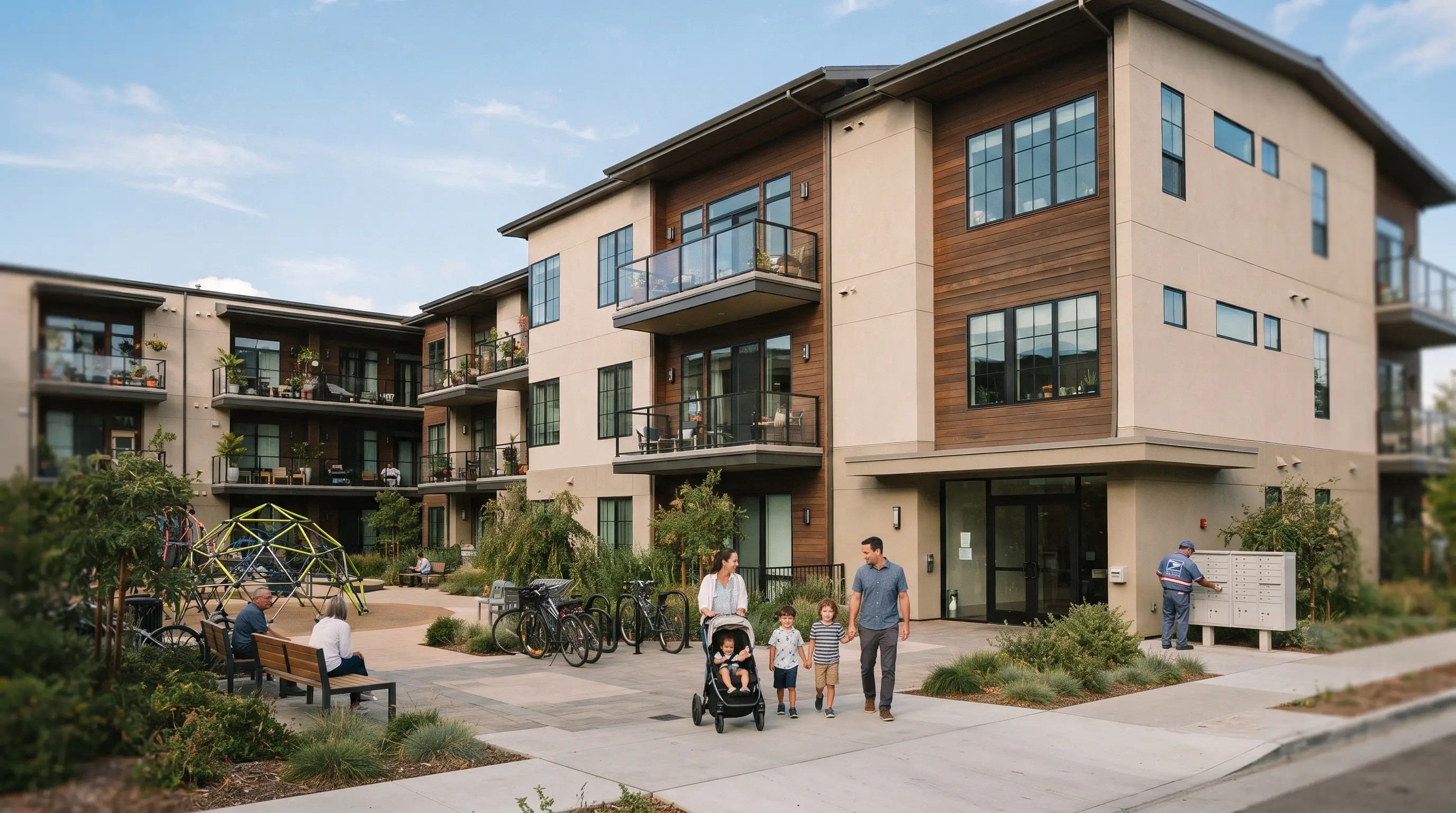
A single rental home might keep you busy, but a multi-family property multiplies every challenge you already know, and adds a few you probably haven't thought about yet. Owning a duplex, apartment complex, or multi-unit building in Jacksonville, NC brings a different scale of responsibility than managing one home at a time. More tenants means more lease agreements to track, more maintenance requests to field, and more moving parts that all need to work together for the property to run smoothly.
For owners who are new to multi-family investing, or those looking to sharpen how they manage an existing property, knowing what to expect can make the difference between a profitable, low-stress investment and one that constantly feels like it's playing catch-up.
Key Takeaways
Multi-family properties require more coordinated systems for maintenance, leasing, and tenant communication than single-family rentals.
Vacancy management becomes more strategic because multiple units often turn over at different times.
Financial reporting grows more complex with shared expenses, multiple income streams, and unit-level accounting.
Local knowledge of the Jacksonville, NC rental market helps owners price units competitively and reduce turnover.
The Scale of Managing Multiple Units
The biggest shift when moving from single-family to multi-family property management is scale. Instead of one lease, one tenant, and one set of maintenance needs, owners suddenly have to coordinate dozens of moving parts at once. A single maintenance issue, like a broken water heater or a pest problem, can affect multiple units if the building shares systems or common walls.
This scale also changes how quickly you need to address problems. A leaking roof in a single-family home is a headache for one household. In a multi-family building, that same leak can displace several tenants and create liability concerns across the property. Owners who understand this shift early are better positioned to build systems that catch issues before they become widespread.
Maintenance Demands Multiply Quickly
Maintenance is often the area where multi-family property owners feel the difference most immediately. Shared systems like plumbing lines, HVAC units, elevators, and roofing affect more people when something goes wrong, and repairs often need to happen faster to avoid tenant complaints or safety concerns. Common areas such as hallways, parking lots, laundry rooms, and landscaping also require regular upkeep that single-family rentals simply don't have.
Because so much depends on keeping these systems functional, many multi-family owners in Jacksonville choose a team that provides consistent property upkeep so inspections, preventative maintenance, and emergency repairs are handled before small issues become expensive ones. Staying ahead of maintenance not only protects the physical property but also keeps tenants satisfied enough to renew their leases.
Tenant Turnover and Vacancy Strategy
More units mean more turnover, and multi-family owners need a strategy to manage vacancies without letting them pile up. Unlike a single-family rental where a vacancy simply means no income until the next tenant signs, a multi-family property with several open units at once can significantly hurt cash flow.
Successful multi-family management involves staggering lease renewal dates when possible, marketing vacant units aggressively, and building a waitlist of prospective tenants for when units become available. Screening also becomes more important at scale, since a poor tenant fit in a shared building can create conflicts that affect the entire property, not just one unit.
Financial Complexity Increases
Financial management for multi-family properties looks nothing like managing the books for a single rental home. Owners must track income and expenses at the unit level while also accounting for shared costs like water, trash removal, landscaping, and common-area utilities. Depending on how the property is structured, some expenses may be split among tenants while others fall entirely on the owner.
This added complexity is why many multi-family owners rely on organized bookkeeping and reporting systems to stay on top of rent collection, security deposits, and operating expenses across every unit. Clear financial records make it much easier to evaluate whether the property is performing as expected and to identify where costs might be trimmed. Owners who want a clearer financial picture often turn to dedicated accounting management support to keep everything organized and accurate.
Compliance and Regulatory Considerations
Multi-family properties face additional regulations that single-family rentals typically don't. Fire codes, occupancy limits, accessibility requirements, and shared utility regulations all come into play once a property houses multiple households under one roof or within one complex. North Carolina landlord-tenant laws still apply, but owners also need to account for building-specific codes that govern shared spaces and safety systems.
Staying compliant requires regular inspections and a proactive approach to identifying potential violations before they become costly fines or legal issues. This is especially true for older multi-family buildings in Jacksonville that may need updates to meet current safety standards.
Why Local Market Knowledge Matters
Jacksonville's rental market has its own rhythm, shaped by Camp Lejeune, seasonal demand shifts, and a mix of long-term residents and military families relocating year-round. Multi-family owners who understand these local dynamics can price units competitively, anticipate seasonal vacancy patterns, and position their property to appeal to the tenants most likely to stay long-term. This local insight often makes the difference between a property that stays consistently occupied and one that struggles with frequent turnover.
FAQs
How many units qualify as a multi-family property?
Multi-family properties generally include anything from a duplex with two units to large apartment complexes with dozens of units, though management complexity increases significantly as unit count grows.
Is multi-family property management more expensive than managing single-family rentals?
Costs vary depending on property size and condition, but multi-family properties often benefit from economies of scale, even though total maintenance and staffing needs are higher.
What is the biggest challenge multi-family owners face in Jacksonville, NC?
Balancing maintenance responsiveness with cost control is often the biggest challenge, especially in older buildings with shared systems that require frequent attention.
Can multi-family properties be managed without a dedicated property management team?
Smaller properties can manage without a dedicated team, but as unit count grows, most owners find professional support necessary to keep leasing, maintenance, and finances running smoothly.
Partner with Innovative to Manage Your Jacksonville, NC Multi-Family Property
Running a multi-family property takes more than good intentions. It takes coordinated systems, responsive maintenance, and financial clarity that keeps everything on track. Innovative Property Solutions understands the unique demands of managing multi-family properties in Jacksonville, NC, and brings the experience needed to help owners protect their investment while keeping tenants satisfied. If you are ready to simplify the way your property is managed, reach out to the team today to get started.